Should you waive a home inspection in New Braunfels?
Keep professional property-condition information in your offer discussion. Before agreeing to a waiver, ask what you would give up and what you would still be able to learn. A New Braunfels home can look ready to move into while leaving questions that a showing cannot answer. Choosing to inspect helps you replace some of those assumptions with observations from a qualified professional.
The decision pressure is understandable. You like the house, you want a clear offer, and you do not want a condition discussion to make the purchase harder. But a cleaner-looking offer and a better-understood property are different goals. There is no promise that skipping an inspection will get your offer accepted. The seller’s response also cannot tell you what you may need to address after you own the home.
Start with the information you want before committing. If you have an unanswered concern about the property, identify who could evaluate it and whether the proposed offer would allow that evaluation. An agent can help organize the conversation. An inspector can discuss the condition review. A Texas real-estate attorney should review proposed changes that affect contractual rights.
You do not need to turn this into a prediction about every possible repair. You need a clear account of the questions you are accepting without answers. A buyer who says, “I can handle cosmetic changes,” has not necessarily considered an unresolved question about a home’s systems. Keep those two kinds of uncertainty separate.
For a broader account of the inspection itself, read what happens during a home inspection in Texas. The offer decision here comes earlier. How much professional condition information do you want to retain before you commit to buying?
What does the proposed waiver actually remove?
Ask your transaction team to describe the proposed change in ordinary language before discussing whether it suits you. “Waive inspection” can hide several different conversations. One proposal may mean skipping the appointment. Another may concern repair requests. Another may change a contractual right. Those proposals do not remove the same things.
Inspection access concerns the opportunity to gather condition information. The repair position concerns what the parties propose to request or agree to address. Contractual rights concern the actual documents. A professional inspection cannot, by itself, answer the last two questions. Likewise, a seller’s statement about repairs does not explain every provision in an offer.
Keep three questions separate
Write down these questions for the people reviewing your offer:
- What professional condition information would I still be able to obtain?
- What, specifically, is being proposed about repair requests?
- Which contractual provisions would change, and who will review their effect?
Use the written proposal for that conversation. A casual label can sound reassuring while leaving its meaning unclear. If someone calls the inspection “informational,” ask what that means in the proposed transaction instead of assuming it is a standard package with predictable protections.
Texas context matters here. The currently published TREC One to Four Family Residential Contract (Resale), Form 20-19, addresses inspection access and property-condition acceptance separately from the termination option. It is a resale form with its own stated applicability. It is not the form for every kind of property or purchase around New Braunfels.
That distinction is a reason to have the appropriate professional review the documents you are considering. It is not a reason to copy a national article’s description of an inspection contingency into your Texas offer. Keep this discussion focused on the proposed commitment rather than a general description of Texas real-estate contract contingencies.
How do the three inspection choices compare?
Compare the choices by the condition information you retain, then have the proposed terms reviewed independently. A professional inspection, an informational inspection, and no inspection can leave you with very different knowledge of the same house. The table is a conversation aid. It does not describe the legal effect of an offer or supply language for a contract.
| Choice to discuss | Condition information retained | Proposed trade-off to examine | Question for your transaction team |
|---|---|---|---|
| Professional inspection with terms independently reviewed | A professional condition review within the agreed scope | Time and arrangements for the review, with the actual rights separately checked | What review can occur under these proposed terms? |
| Informational inspection with the repair position professionally reviewed | A professional review still provides condition information | The proposed limits on repair requests need their own review | What does informational mean in this specific proposal? |
| No professional inspection | No professional inspection report from that appointment | You accept more unanswered condition questions | What would remain unknown when I commit? |
The middle choice deserves care. Freddie Mac discusses an informational inspection as a way to retain the benefit of a professional review while changing the repair discussion. Its national guidance does not establish what a Texas buyer can do under a particular signed agreement. Have the actual proposed terms reviewed rather than relying on the name.
The last choice removes an information source. It does not make the unresolved questions disappear. If you skip the appointment because the rooms look well cared for, your conclusion rests on what you saw during the showing and whatever other information you reviewed. That is a narrower basis than a professional inspection.
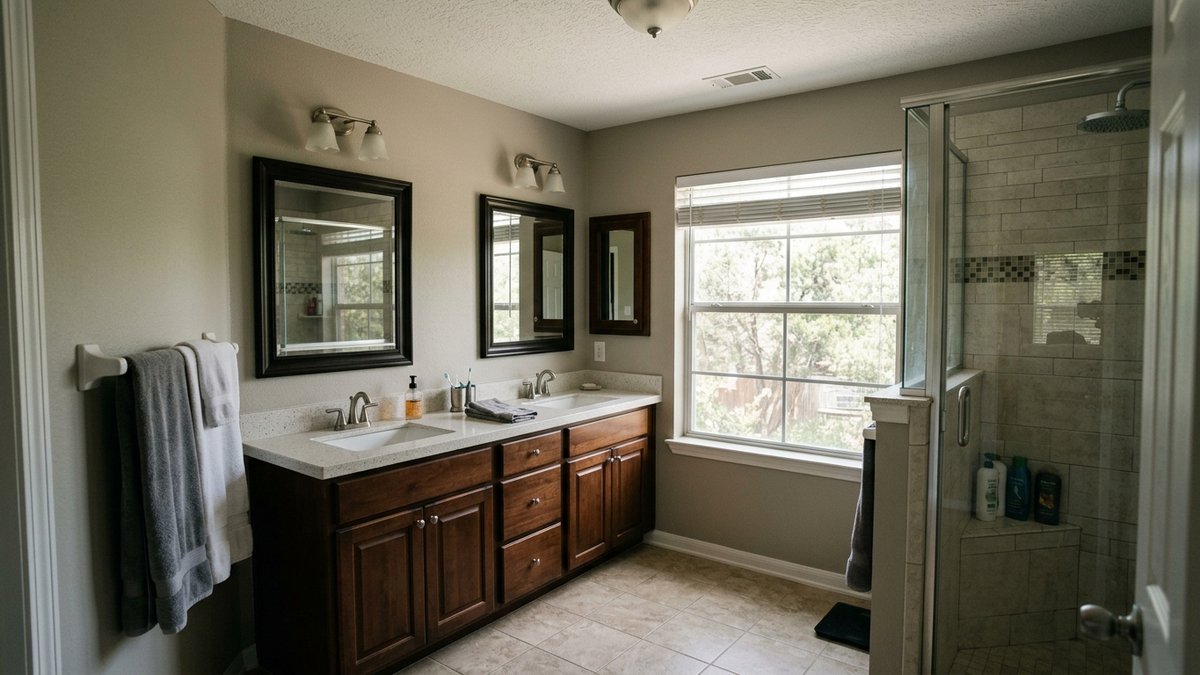
Consider a hypothetical bathroom with a clean vanity, tile and neatly hung towels. Those features can help you judge appearance. They do not establish the condition of everything behind a finish or answer every plumbing question. A tidy room is useful evidence of what is visible, but it should not become a claim about hidden conditions.
A comparison is useful when you can explain the trade-off in your own words. “We would still inspect, and these proposed terms need review” is more precise than “we are waiving something to make the offer stronger.”
How much certainty can an inspection provide?
An inspection provides condition information within its scope, not certainty about the whole property. Texas inspector standards describe a limited visual survey and basic performance evaluation. The practical value is that a qualified person can examine more than a buyer can reasonably assess during a showing, while still working within defined limits.
Read the inspector’s proposed scope and ask about a specific concern before relying on the appointment to answer it. If a question needs a different service or a qualified contractor, discuss that separately. The point is to understand what information would be available, rather than counting every unanswered question as something the general inspection will resolve.
This also keeps your expectations realistic when deciding whether to skip the review. You are comparing a limited professional evaluation with the information you would have without it. Neither choice comes with complete knowledge. The difference is whether you retain that professional evaluation. An inspection may take place after the contract is signed. Inspection access alone does not postpone commitment or create a contractual opportunity to act on findings. Ask the people reviewing your proposed terms what commitment would precede the inspection and what choices, if any, would remain after it.
An appraisal serves another purpose. Freddie Mac distinguishes an opinion of market value from an inspection, and notes that an appraisal may not reveal underlying issues an inspection could identify. A lender’s valuation process should not be treated as a substitute for the condition information you want as a buyer. Glen’s appraisal-process guide for New Braunfels buyers explains that separate process.
Avoid the opposite overstatement, too. An inspection report does not promise that ownership will be free of future problems. It can help you make a more informed decision about what has been evaluated and what still needs attention. That is useful even when the seller does not agree to a repair request.
For a New Braunfels resale purchase, keep the inspector’s scope, the seller’s repair position, and your proposed documents in separate conversations. Each answers a different part of the decision. Combining them into one reassuring word can conceal the question you most need answered.
What should you bring to the offer discussion?
Bring one unresolved condition question and the exact proposed change to your offer conversation. Those two items make the discussion concrete. You can then ask who could evaluate the question, what information the proposed terms would let you obtain, and what you would be committing to without that answer.
For example, suppose you like a resale home but want a professional opinion about a visible condition that concerned you during the showing. Describe the observation without diagnosing it. Ask an inspector what kind of evaluation fits the concern. Separately, ask the people reviewing the offer how the proposal affects your ability to arrange that evaluation and consider the result.
Then explain your own tolerance for an unresolved answer. Could you accept the uncertainty, or would the missing information change whether the house fits your plans? Treat that as a buyer decision to discuss, not a repair estimate or a prediction about the seller. You do not have to invent a dollar amount to recognize that a question matters.
Ask for a clear explanation of proposed changes before deciding. If the answer depends on contractual language, take the actual documents to the appropriate qualified professional. A general article cannot determine the effect of a specific offer, and a condition review cannot supply that legal review.
Finish the conversation with a shared understanding of what will be evaluated, what will remain unknown, and which proposed terms need separate professional review. That gives you a useful basis for deciding how to proceed with this New Braunfels home, without relying on its presentation or on a promise that a waiver will secure the purchase.